



Most sustainability narratives in fashion still concentrate on two moments; the beginning and the end. We ask how something is made — what fibres, what factories, what footprint — and we ask what happens when it is finally discarded. These are important questions, but they leave out the longest, most ordinary, and most consequential phase of all: the years in between. The wearing, washing, storing, protecting, repairing, and slowly altering of a garment as it moves through real life. At The Lab, we design deliberately for this neglected middle, because it is where most of a garment’s true environmental impact accumulates – and where we know that we can effect the most change.
Over time, this impact is shaped less by any single dramatic event than by hundreds of small, repeated actions. Energy used in washing and drying, water consumed across years of care or fibre stress from friction, heat, and harsh chemistry; these are all slow, compounding erosions that turns something perfectly wearable into something “tired,” then “only for home,” and eventually into something that feels easier to replace than to maintain. If sustainability is about changing outcomes rather than simply signalling intent, then it is in this middle phase that the real work has to happen.
One of the less comfortable truths in fashion is that most garments do not fail because they were badly designed – instead, they fail because of how they are treated through routine: washing a little too hot, using a little too much detergent, relying on the dryer because it is faster, skipping protection because it feels optional, storing carelessly because space is limited and time is short. None of these actions feel particularly significant on their own, yet together they determine whether a garment lasts two years or ten. This is why we think of durability as something that is produced through behaviour and habit over time, as much as the inherent material quality.
Even the most technically sophisticated textile will degrade quickly if the care system around it is misaligned with real human behaviour, which is often rushed, inconsistent, and shaped by convenience rather than long-term thinking. Conversely, a relatively ordinary garment that is supported by better daily care practices will often outlast something far more advanced. The middle of life is where these two realities meet; material science on one side, and human routine on the other. It is precisely this intersection where The Lab positions its work.
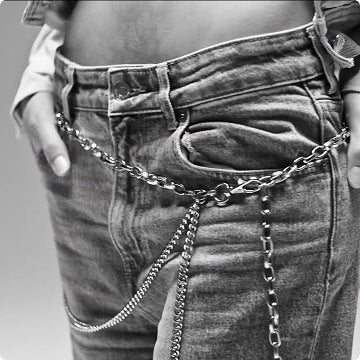
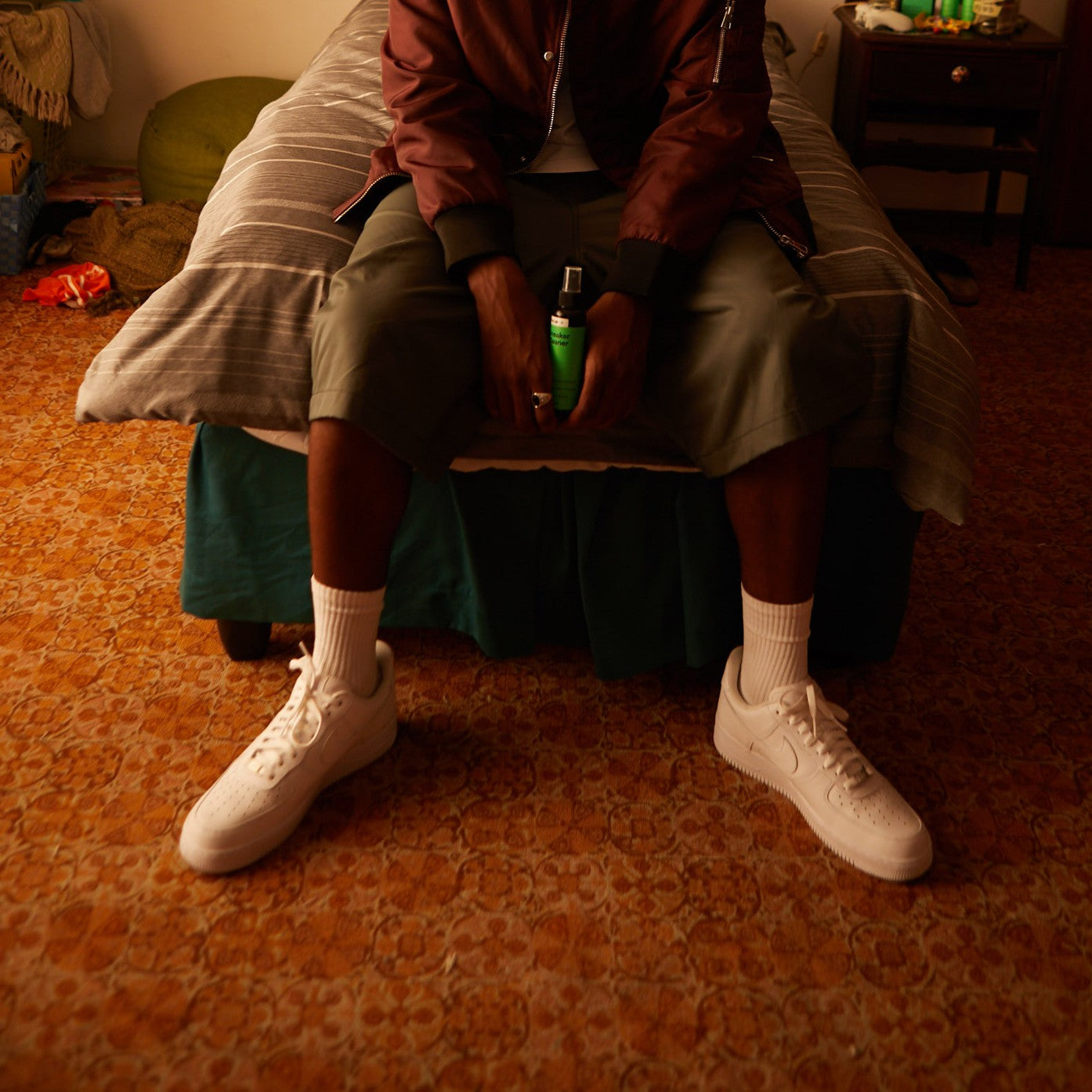
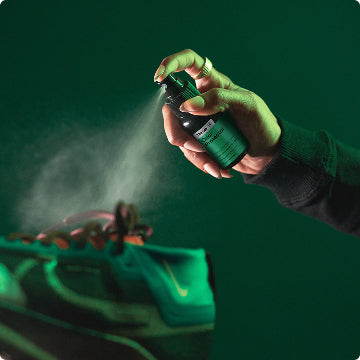
This is why we think in terms of interconnected systems, and have developed our care ecosystem across hats, denim, leather, apparel, and sneakers. Instead of a ‘one-size-fits-all’ detergent or spray, we are building probacterial, category-specific care systems that respond to the real material and usage conditions of each garment type. Cleaning, protecting, refreshing, storing, and repairing are part of a single loop of use. Your garments and accessories move through a constant field of contact, moisture, bacteria, oils, UV exposure, and mechanical stress — all of which are either slowly degrading them or helping to preserve them — and we are here to support your ability to tip that balance toward longevity rather than decay.


Traditional fashion care has largely been built around strong chemicals, high temperatures, and aggressive cycles. The logic is short-term efficiency; get it clean, get it dry, get it done. The long-term cost of this approach is paid in fibre fatigue, colour loss, shape distortion, and a steadily shortened lifespan.
Our approach is structured around cumulative outcomes instead. By using enzyme and probiotic systems that work effectively in waterless or low-temperature conditions, we reduce the need to rely on heat as a blunt instrument. By developing protection systems that reduce damage before it happens, we lower both the frequency and severity of cleaning. And by treating odour, bacteria, and material stress as interconnected rather than separate problems, we are able to reduce the total strain placed on garments across their lifetime.
The changes this produces are not spectacular, and they are not meant to be. They show up as slightly colder washes, slightly less frequent cleaning, more preventive care, and more considered storage. Over hundreds of repetitions, these small shifts begin to reshape the entire lifespan of what we own, through a different baseline of everyday behaviour. This is also why we talk about moving from a disposal culture to a maintenance culture. A disposal culture is built on the assumption that replacement is easier than care and that the moment something shows wear, it has failed. A maintenance culture, by contrast, assumes that wear is part of a longer relationship, and that longevity is produced through ongoing attention rather than through the absence of change.
In most fields — from architecture to engineering to medicine — maintenance is understood as a core part of system design. Fashion has been an exception, historically organised around novelty, speed, and an acceptance of obsolescence and degrading quality. Care has largely been outsourced to the consumer, often without the right tools, guidance, or supporting systems. Designing for the middle of life means taking responsibility for that gap, and it means recognising that a garment’s environmental impact is shaped week after week by how it is lived with.

This is why we describe our work as building the care layer of fashion. Not a layer that claims to replace materials or solve everything upstream, but one that determines how long any material — conventional or innovative — is able to survive in real conditions. In this sense, care practices are one of its most powerful leverage points of sustainability. By the time a garment reaches the end of its life, most of the outcome has already been decided by years of ordinary use.
If fashion is serious about becoming a lower-impact, longer-lived system, then some of the most important work is how they are eventually disposed of, but in how they are supported, maintained, and kept alive in the long, decisive middle in between. The Lab is your system for making the middle of life last.
