






We’re convinced that the future of fashion is grounded in the notion of performance; and we don’t mean in the traditional sense of durability or technical enhancement alone, rather; the evolved form of performance, which functions by impact; how a material, product, or system behaves across its entire lifecycle. In this emerging paradigm, the most progressive work in fashion is how to draw out function in ways that reduce harm at every stage.
The concept of “low-impact performance” focuses on moving away from treating sustainability as a separate category — an add-on, a label, a marketing claim – and reframes it as a baseline standard. The question is, now, is whether a product can perform in a way that actively minimises environmental strain while maintaining, or even improving, its utility.

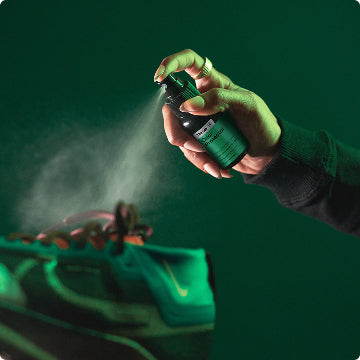
One of the clearest entry points into this shift is fashion care. At The Lab, we have always found it curious that garment maintenance is so often treated as a neutral afterthought, when in reality it accounts for a significant portion of a product’s total environmental footprint. High-temperature washing, aggressive detergents, and frequent laundering cycles consume energy and water, while wearing down fibres over time — shortening the lifespan of garments and hastening their journey to landfill. For us, this has always seemed like one of the most obvious places for meaningful change, and it's why we have invested so deeply in biotechnology, and in the remarkable potential of microbiology, to offer a smarter, lower-impact approach to care.
Low-impact performance challenges this model at its core. Cold-wash detergents, for example, represent a recalibration of chemistry to work effectively at lower temperatures, drastically reducing energy use. At the same time, fibre-safe formulations such as ours, that draw on enzymatic or microbial processes, clean without stripping materials of their structural integrity. The result is twofold: a lower environmental cost per wash, and a longer usable life for the garment itself.
A similar transformation is underway in textile protection. Histoically, water- and stain-resistant finishes have relied on PFAS (per- and polyfluoroalkyl substances), a class of chemicals now widely recognised for their persistence in the environment and potential harm to human health. The move toward PFAS-free alternatives marks a critical turning point, but the most interesting developments go further than simple substitution.

New protection systems are being designed to work with materials rather than against them, forming breathable, biodegradable barriers that maintain performance without introducing long-term toxicity. Companies like Rudolf Group, for example, have developed fluorocarbon-free finishes such as their BIONIC-FINISH® ECO technology, which mimics natural water repellency mechanisms without relying on persistent chemicals. Similarly, Pangaia has been experimenting with bio-based treatments across their activewear offering, that align protection with biodegradability and circular design principles. Their use of EVO® Nylon by Fulgar — a bio-based polyamide derived in part from castor oil — and regen™ BIO Max elastane by Hyosung reflects a shift toward materials engineered for lower impact from the outset. Rather than relying on external coatings to force performance, these innovations embed resilience, stretch, and reduced environmental load directly into the fabric; pointing toward a future in which protection is intrinsic and crucially, safe.
These innovations beckon a broader shift toward what might be called biological performance, and its inherently low-impact. Instead of imposing synthetic control over materials, designers and scientists are increasingly looking to biological systems for cues. Microbial processes, for instance, are being used to support material longevity; breaking down residues that would otherwise accumulate and weaken fibres, or even creating living coatings that respond dynamically to their environment. In this context, performance is equal to a relationship; between garment and wearer, fibre and microbe, product and ecosystem.
This systems-oriented thinking extends into manufacturing itself. Biodegradable finishes, circular chemistry, and regenerative material processes are beginning to reassert what it means to produce clothing in the first place. Rather than designing for end-of-life disposal, these approaches consider how materials can re-enter cycles of use; whether through safe decomposition, chemical recovery, or biological reintegration. The potential is unlimited, and we are so excited to be part of this revolutionary emerging category of complexity and wonder.

We’ve seen firsthand how these innovations invite a shift from passive consumption to active participation in the lifecycle of a garment. Our community is washing less and caring smarter. What emerges, naturally, is a more holistic understanding of value in fashion. Durability, today, expresses how a garment or product interacts with the systems around it, and performance is equally measured in ecological terms; energy used, chemicals released, fibres preserved, waste avoided.
This reframing has significant implications for how brands should be positioning themselves. As consumers become more literate in the mechanics of sustainability, it's no longer enough to obfuscate responsibility with surface-level claims, and we know that our community is looking for demonstrable functions across everything they purchase. We reckon this moves the industry beyond symbolic gestures and into the realm of measurable change. It acknowledges that true progress lies in the integration of multiple systems — chemistry, biology, design, and behaviour — working in concert. The future of fashion will be informed by how fashion works, how it endures, how it adapts, and ultimately; how it returns to the systems that sustain it.
